
If you cannot drive after outpatient surgery, non emergency medical transportation can be your ride home after surgery. In Northern Virginia, Protego Transport does more than a rideshare ever will. We pick you up inside the surgery center and help you into the vehicle. Then we walk you through your own front door, 24/7.
Here is what families and discharge nurses ask us most often about getting home after a same day procedure. Here is how we handle each one.
Why can’t I just drive myself or take a rideshare?
Most surgery centers will not release a patient who has had sedation or general anesthesia without a responsible adult. That is not red tape. For hours after the procedure, your reaction time, balance and judgment are off, even when you feel fine. The American Society of Anesthesiologists advises having someone drive you home and, ideally, stay with you afterward.
So driving is out. MedlinePlus, from the National Library of Medicine, is just as clear on that point. A rideshare is not much better. The driver stays in the front seat and drops you at the curb. That usually does not meet the surgery center’s requirement either.
Some centers will accept a professional medical transportation driver as the responsible adult. Others require a family member or friend to ride along as well. Ask your surgery center what they require before the day of the procedure. Then tell us when you book, so we can plan the ride the way they want it.
What does a ride home after surgery in Northern Virginia actually look like?
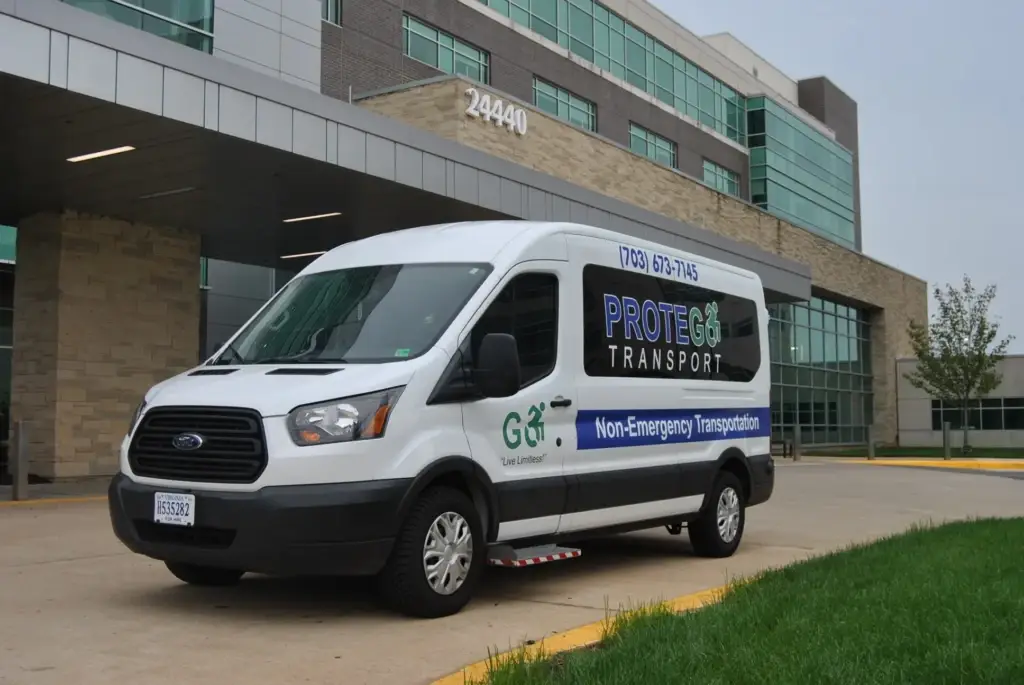
Every Protego ride is door through door. That means the driver does not wait outside. When the recovery nurse says you are ready, the driver comes to the discharge area. The driver helps you into a wheelchair if you need one and brings you out to the vehicle. Next comes the transfer into the seat, or we secure your wheelchair. We make sure you are belted in and keep the ride smooth and unhurried.
At home, the driver walks you inside and helps you to a chair or bed. We make sure you are settled before leaving. Discharge paperwork, prescriptions or a bag from the center come inside with you. For someone groggy or sore, the walk from driveway to couch is often the hardest part. It is also the part a curbside ride skips.
Which ride type do I need for my ride home after surgery?
It depends on how you will be moving when you leave the recovery room, not how you walked in.
An ambulatory ride works if you can walk short distances with a steady arm to hold. A wheelchair ride is the right choice after foot, knee or hip procedures. It also fits after anything that leaves you lightheaded, or any time the nurse wants you off your feet. A stretcher ride is for patients who need to stay lying flat. That is less common after outpatient surgery. It does come up after certain spine and vascular procedures.
If you are not sure, ask your surgical nurse before the procedure how you will be leaving the recovery area. Then tell us, or talk it through with us on the phone. Our guide on how to choose the right medical transportation walks through the same questions in more detail.
Can a family member ride with me?
Yes. A spouse, adult child or friend is welcome to join your ride home after surgery. For many surgery centers, that is the simplest way to satisfy the responsible adult rule. Let us know when you book so we save the seat.
Can you also take me to the procedure in the morning?
Yes. Many families book a round trip. We pick you up early at home so you arrive on time for check in. Then we bring you back once the center calls. Outpatient surgery often starts early, and we operate 24/7, so a pickup before sunrise is not a problem. The driver walks you in and gets you to the registration desk. That matters when you have been told not to eat or drink and are not at your best.
What if my discharge time changes?
It usually does. Procedures run long, recovery takes longer than expected, or you are ready early. When you book, give us the scheduled surgery time and the center’s best estimate for discharge. Ask the recovery nurse to call us when you are about thirty minutes out. We would rather adjust your ride home after surgery than leave you waiting in a recovery chair. We also do not want a driver sitting in the lot while you are still in surgery.
What should I tell Protego when I book my ride home after surgery?
A few details make the day go smoothly. Tell us the name and address of the surgery center and which entrance it uses for discharge. Tell us how you expect to be moving afterward: walking, wheelchair or stretcher. Let us know if you use your own wheelchair or need one of ours. Mention any stairs at the pickup or at home, even a few porch steps. That way the driver brings the right equipment and plans the transfer. And tell us whether a family member is riding along and whether the center requires one.
We give quotes by phone so we can match the ride to your situation rather than guess.
Where do you serve?
We serve Northern Virginia, including Fairfax, Loudoun, Prince William and Arlington counties and the surrounding cities. We also run long distance trips within Virginia for procedures in Richmond, Charlottesville or elsewhere in the state. Local or long distance, every ride home after surgery gets the same care. It is door through door, with help at every transfer, any hour of the day.
Booking your ride home after surgery
The best time to arrange transportation is when the procedure is scheduled, not the night before. Call us with the date, the center and the ride type. We will set up the morning trip and the return. If the plan changes, call again. Getting you home safely is the whole job.
Related service: Hospital Discharge Transportation in Northern Virginia. Door through door, 24/7.
Call (703) 673-7145 for a free quote. Where care meets mobility.