
Yes, a family member can ride along. Medical transportation with a companion is one of the most common requests we get at Protego Transport, and a spouse, adult child or caregiver is welcome in the van at no charge on every ride we run in Northern Virginia.
Families ask this question for good reasons. Someone has to hear what the doctor says. Someone has to hold the bag with the paperwork. Sometimes the rider just does better with a familiar face next to them. Here is how it works.
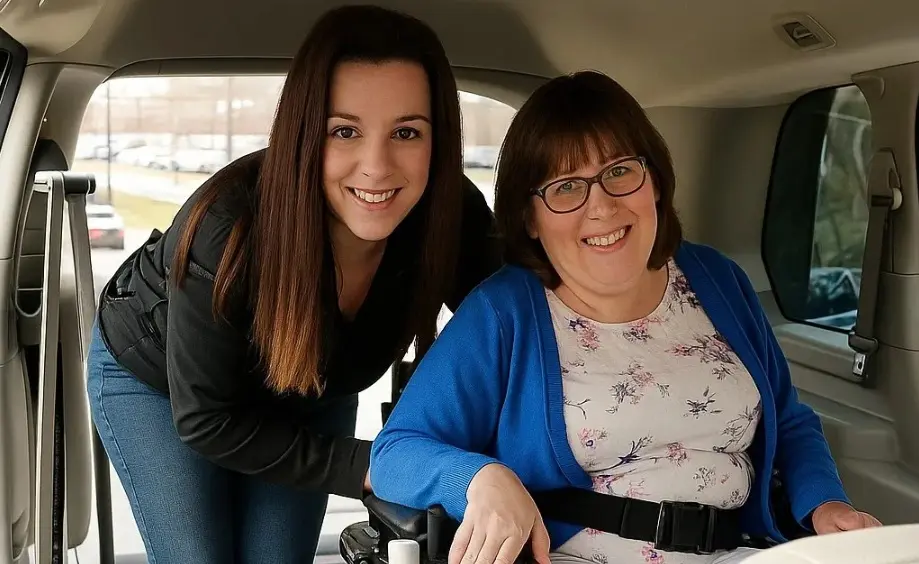
Who counts as a companion?
A companion is anyone from the rider’s own circle who comes along for support. That is usually a spouse, a son or daughter, a sibling, a friend or a hired home caregiver who already knows the rider well. A companion does not need any training and does not have any duties during the trip.
Our driver handles everything physical. The companion can sit back, keep the rider company and be ready to speak with the office when you arrive.
Does medical transportation with a companion cost more?
No. Medical transportation with a companion costs the same as riding alone. One family member or caregiver rides free on any ride, local or long distance. We do not treat a companion as a second passenger, and there is nothing extra on the quote for them. Just tell us when you book so we plan the seating around the wheelchair or stretcher position.
How many people can ride along?
Our van is set up for the rider first, with seating for a companion beside them. If more than one person wants to come, call and ask. Depending on whether the ride is wheelchair or stretcher, there may be room for a second companion, and we would rather tell you yes or no on the phone than have you find out at the door.
Where does the companion sit?
In a regular seat with a seat belt, close to the rider. On a wheelchair ride, the chair is secured to the floor and the rider wears a lap and shoulder belt, with the companion in the seat next to or just in front of them. On a stretcher ride, the companion sits where they can see and talk to the rider during the trip.
What is the difference between a companion and an attendant?
This is the part of medical transportation with a companion that confuses people most, so here is the plain version.
A companion is family or a friend. They ride free and have no job to do.
An attendant is a second trained Protego team member who rides along with the driver. The attendant is an extra set of hands for the lift, the transfer and the walk inside, and they stay focused on the rider for the whole trip. An attendant is an added service, and we quote it by phone along with everything else.
You can have both. A daughter can ride along for comfort while an attendant handles the physical side. Many families choose exactly that for a stretcher trip or a first ride after a hospital stay.
When should you add an attendant?
Most wheelchair rides do not need one. Our drivers are trained in securement and safe transfers, and every ride is door through door, so the driver already comes inside, helps with every transfer and walks the rider to check in. A companion plus the driver covers the typical appointment.
An attendant makes sense when the rider needs two people to move safely, when there are stairs at the house, when the rider is on a stretcher and the route inside is long, when the rider has dementia or gets anxious in unfamiliar places, or when the family member who would normally help cannot lift. If you are not sure, describe the situation when you call. We will tell you honestly whether one person is enough.
Can the companion stay for the appointment and ride home?
Yes. On a round trip the companion comes back in the van the same way they came. If the companion plans to leave separately, or meet the rider at the office instead of at home, tell us when you book so we know who is coming out to the van on the return.
Can you book long distance medical transportation with a companion?
Yes, and we recommend it. On trips within Virginia to Charlottesville, Richmond or anywhere else in the state, a familiar face makes a long drive easier for the rider. We run these trips 24/7, with the same door through door help at both ends, and the companion rides free the whole way.
What should the companion know before the ride?
A few things make the day smoother. Let the driver do the lifting, even if you have done it a hundred times at home, because the van has its own equipment and the driver knows how to use it. Bring the appointment paperwork, a list of medications and anything the office asked for. The National Institute on Aging’s tips for caregivers has a good checklist for the visit itself. And if the rider has a habit or a comfort item that helps, bring it. We would rather know than guess.
If you are still deciding what level of service your loved one needs, our post on curb to curb versus door through door explains what the driver actually does at each end of the trip.
How to book medical transportation with a companion
Call us with the pickup address, the destination, the appointment time and whether the rider uses a wheelchair, a stretcher or can walk with help. Tell us who is riding along and whether you think an attendant is needed. We give every quote by phone so we can match the ride to the situation, and we are available 24/7, including weekends and holidays.
Related service: Ambulatory Transportation in Northern Virginia. Door through door, 24/7.
Call (703) 673-7145 for a free quote. Where care meets mobility.